
Your room inventory may miss the shared kitchen.
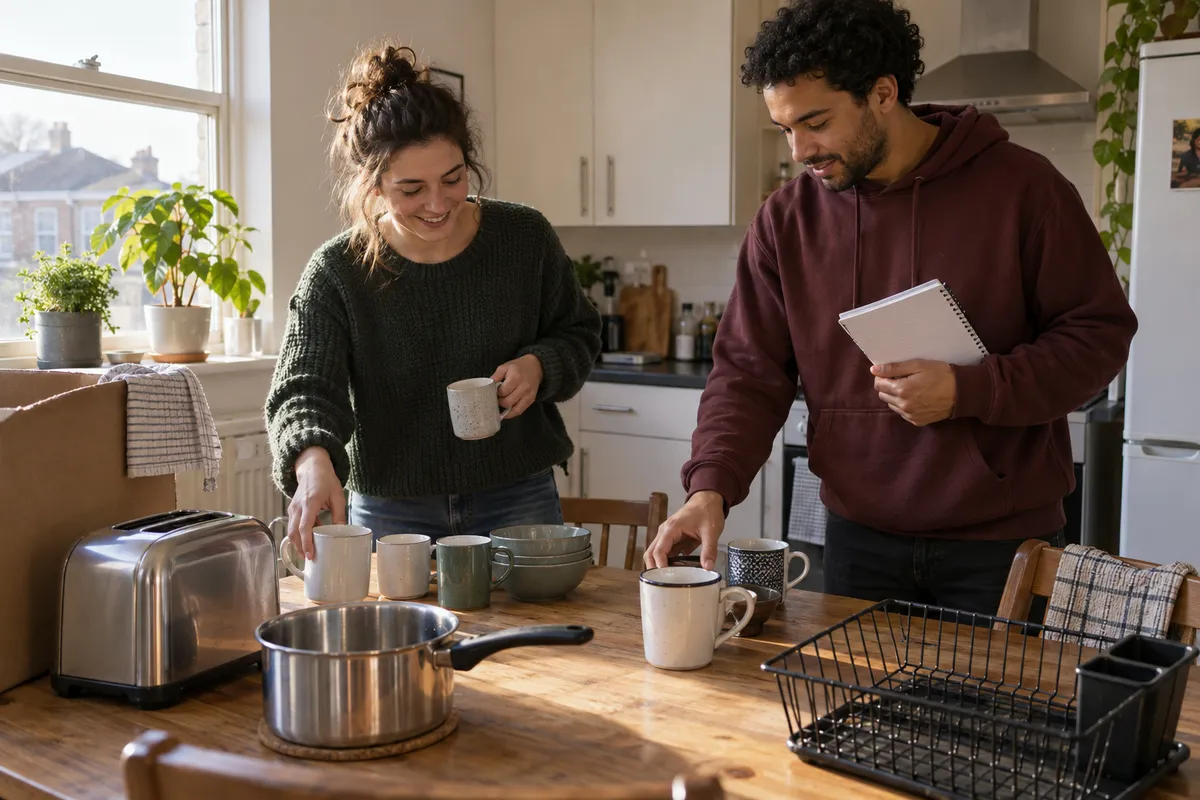
You have photographed your bedroom, but the toaster, pans and chipped mugs in the kitchen are still a mystery. Some belong to the landlord, some to current housemates and some may have been left behind. A useful shared-kitchen record identifies those uncertainties instead of turning everything on the worktop into your personal inventory.
How can you do this in DepKeeper? See the app example ↓
Start with the supplied inventory, not a new assumption
Ask which document covers the common areas and which items are included with your accommodation. A bedroom-only list cannot tell you whether a saucepan in the shared kitchen is supplied. Compare the kitchen with the document, then put questions in a separate column. Do not move or discard belongings merely because they are absent from your list.
Shelter England recommends checking an inventory for accuracy, noting missing or unrecorded damage and keeping a copy. Its guidance is for England. The practical sorting method here is not a statement about joint liability, deposit deductions or accommodation rules elsewhere in the UK; your agreement and housing arrangement need separate attention.
Use three ownership labels, including an honest unknown
Begin with “listed as supplied”, “identified as a housemate’s” and “ownership not confirmed”. For the second label, record whose explanation you are relying on without publishing their private details. “Alex says the kettle is theirs” is an attributed explanation, not a legal finding. Ask before photographing another person’s possessions or moving them to make a neat display.
List quantities and distinguish similar objects. Four blue mugs and one white mug are easier to recognise than “five mugs”. Avoid turning the exercise into a catalogue of people’s groceries or personal routines. A photo of the worktop, a close view of a relevant mark and a short item description usually communicate the point better than pictures of every cupboard.
Separate the condition of equipment from kitchen cleanliness
An old scratch on a hob, food left on a worktop and a missing saucepan are different observations. Put each under the correct heading. Describe the location and visible condition without deciding who caused it. A cleaning rota does not, by itself, identify who damaged an object; an inventory is not a record of who cooked every meal.
For an appliance, note the check actually made. A toaster being present is different from switching it on, and a light illuminating is not a full functional test. Do not test equipment with damaged cables or an uncertain setup. Report the concern through your accommodation’s normal channel rather than attempting repairs during the handover.
A sample note when ownership is unclear
This fictional example shows how to leave a question open. Adapt it to the item and photograph you actually have; do not insert a name or condition from the example into your own report.
Keep a record when the household changes
If someone takes their own kettle when moving out, add a dated change note once the ownership and removal are confirmed. Do not rewrite the arrival list to make it look as though the kettle was never there. If a supplied item is replaced, keep the relevant messages and clearly distinguish the old and replacement items.
When one student leaves before the others, photograph the shared area as it is at that time. Describe what you personally returned or removed. Do not sign a statement that every housemate has cleared their belongings if they have not. A shared photo cannot establish what happened after it was taken or allocate a repair bill.
Before you finish the kitchen handover
Review the open questions with the accommodation contact and keep a copy of the response. Store an item list separately from access codes and personal information. Share only what the recipient needs to understand the supplied equipment and its condition.
- Find the document covering the shared kitchen.
- Separate supplied, personal and unconfirmed items.
- Count recognisable items without guessing ownership.
- Match visible marks to overview and detail photos.
- Mark untested functions explicitly.
- Record the date, who observed the items and any unanswered question.
- Recheck the list at departure without overwriting arrival observations.
Use DepKeeper to organise the photos, not decide ownership
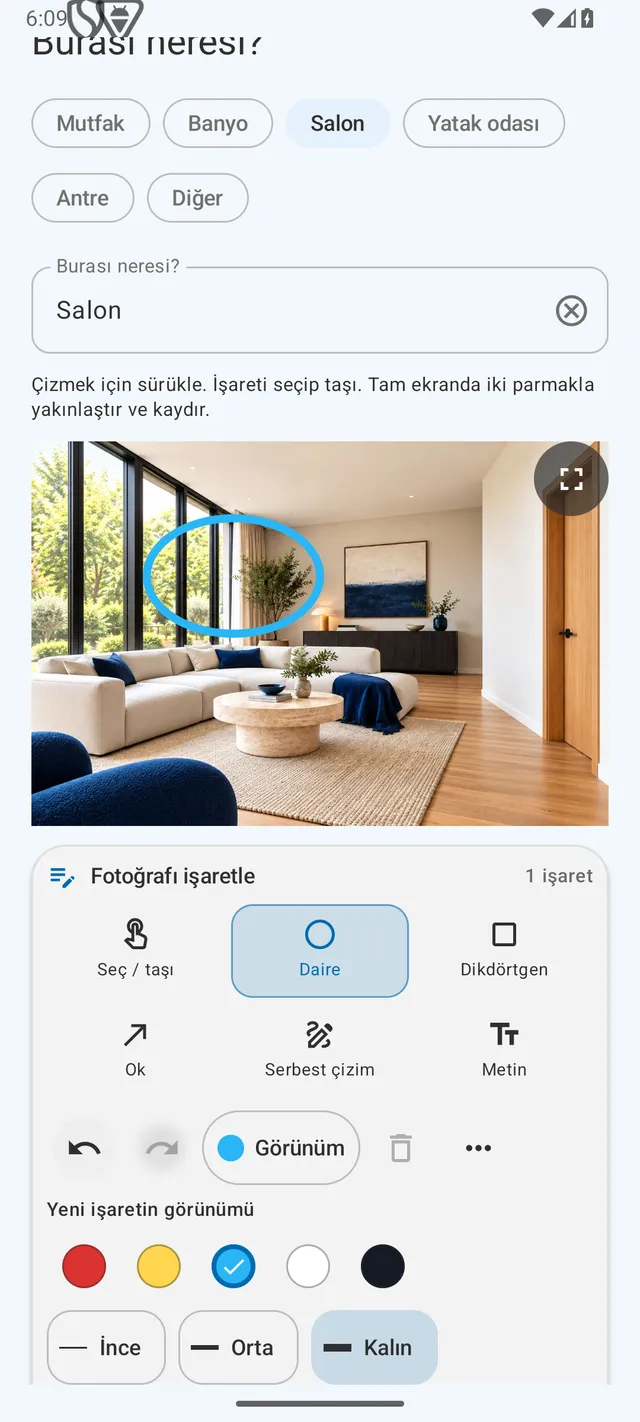
In DepKeeper’s rental-home flow, you can group observations under a room such as “Shared kitchen”, add short photo notes and manually mark a visible detail. Keep the original uncertainty in the text: the app does not determine who owns a toaster or who should pay for a replacement.
A photo report can support the conversation alongside the accommodation’s own inventory. It does not replace forms your provider requires. The Android store release is still being prepared; use the printable checklist now or join the launch waitlist. The app example below is a labelled preview, not a claim that your university uses DepKeeper.
PUT IT INTO PRACTICE WITH DEPKEEPER
Make it clear which detail you mean.
Use DepKeeper’s annotation tools to connect an observation to the relevant part of a photo. Keep the overview too, so the detail retains its context.
- Add the room and a short observation.
- Choose a circle, rectangle, arrow, freehand line or text.
- Check the annotation and description before creating your report.
The Android app is being prepared for store release.
Prepare your shared-kitchen notes.
Use the free checklist now and request a notification when the Android app launches.
Sources
Sources checked: 28 September 2026. Shelter’s guidance concerns England. The kitchen workflow and fictional example are DepKeeper editorial suggestions, not legal advice or evidence of a university partnership.